As an Amazon Associate this site earns from qualifying purchases.
Top Picks
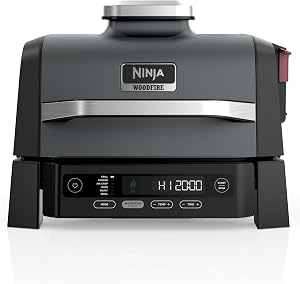
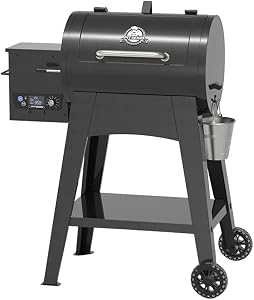
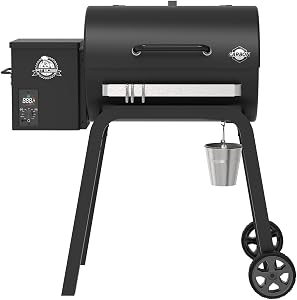
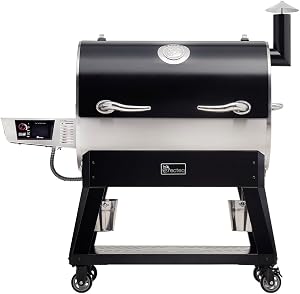
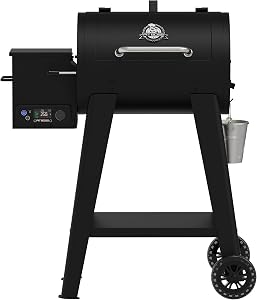

- Dial-in digital control with LCD screen
- Porcelain coated steel cooking grids

- REAL HARDWOOD FLAVOR: Pellet smoker grill to help create a richer, smokier flavor, fueled with 100% all-natural hardwood pellets
- ROOM FOR ONE MORE: Pit Boss pellet smoker has 718 sq in of total cooking surface for dozens of patties at once, plus smoked veggies, desserts and more

- SMOKY STATS: These wood pellet grills and pellet smoker grill combo deliver 1667 sq in of cooking space, 180ºF-700ºF range, 40-hour nonstop cooking with a full hopper, PID
- DO IT ALL WITH ONE GRILL: Smoke, BBQ, Sear, Bake, Braise, & even Dehydrate on this outdoor grill & smoker for incredible wood fired flavor every time with wood pellets

- Reach temperatures from 180° to 500° with the digital control board with 5°F increment settings
- Turn up the heat with the Flame Broiler Lever which allows for direct flame searing up to 1,000°F

- Premium 24″ Ceramic Grill with Cart & Locking Wheels – The Kamado Joe Big Joe I gives the perfect cooking size of 24 inches along with its premium cart that comes with the
- 2-Tier Divide & Conquer - Divide & Conquer Flexible Cooking System transforms the humble grill grate into the most powerful cooking tool in your arsenal. The revolutionary
The Mid-Cook Meltdown We've All Lived Through
Look, if your pellet grill is acting up with a brisket sitting at 140°F and dropping, you don't need a 5,000-word lecture. You need answers — and you need them in the next 90 seconds.
After seven years of running pellet grills (currently three in my backyard rotation — a Traeger Pro 575, a Camp Chef Woodwind, and a Z Grills 7002B), I've hit just about every error code, auger jam, and temperature swing the BBQ gods can throw at you.
Blown fuses at 3 AM during an overnight pork shoulder cook? Done that.
A wet pellet jam halfway through Thanksgiving dinner? Yep.
Igniter rod failing the morning I was hosting twelve people? Twice.
This is the no-nonsense troubleshooting playbook I wish someone had handed me back in 2019.
The Numbers That Tell the Real Story
| The Stat | The Truth Behind It |
|---|---|
| 90% | of pellet grill issues trace back to just 4 root causes |
| 60% | of "not heating up" complaints are caused by bad pellets alone |
| 3–4 cooks | how often you should clean your firepot for peak performance |
| 18 months | average lifespan of an igniter rod before failure |
| $15 | average cost to fix the issue you're probably panicking about |
Last Updated: May 2026 | Written by Marcus Holloway, 7-Year Pellet Grill Veteran
> ### "Your brisket is at 140°F and dropping. The controller is blinking. Panic sets in." > > Don't worry — I've been there more times than I can count, and every single problem has a fix. Take a breath. We're going to walk through this together.
Quick Picks: The Three Tools That Have Saved My Cooks
Before we dive deep, these are the three pieces of gear I reach for the moment something goes sideways. Each one has earned its place on my shelf the hard way — meaning I learned why I needed them by not having them at the worst possible moment.
| The Problem | The Battle-Tested Fix | Price |
|---|---|---|
| Inconsistent temps / bad probe readings | ThermoPro TP20 Wireless Thermometer | See the product list on this page |
| Auger jams from low-quality pellets | Kamado Joe | See the product list on this page |
| Moisture in hopper / weather damage | Traeger Pro Series Grill Cover | See the product list on this page |
> PRO TIP FROM MARCUS: If you only buy one upgrade after a failed cook, make it a quality wireless thermometer. The factory probe lies to you more often than you think — and 80% of "my grill is broken" calls turn out to be probe drift, not actual grill failure.
Why Pellet Grills Misbehave (The Honest Truth Nobody Tells You)
Here's the thing nobody mentions when you unbox a shiny new pellet rig: these machines are essentially computer-controlled wood stoves with attitude. They have moving parts. Sensors. A literal fire inside. When one variable goes sideways, the whole cook can collapse like a house of cards in a hurricane.
In my experience — and the experience of every pitmaster I know — 90% of pellet grill issues come down to four root causes.
The Four Horsemen of Pellet Grill Failure
> 1. BAD PELLETS — moisture, sawdust, off-brand bargain-bin junk > > 2. DIRTY COMPONENTS — ash buildup, grease pooling, gunked-up sensors > > 3. MOISTURE INTRUSION — wet hopper, soaked electronics, rusted firepot > > 4. FAILING HARDWARE — dying igniter rod, tired auger motor, weak induction fan
Those cryptic error codes manufacturers love to flash at you — ErH, ErL, ErP, LEr — are usually just downstream symptoms of one of these four villains. Diagnose the root cause, and the codes vanish like smoke on a windy day.
Watch This First: The 8-Minute Crash Course
Before you start tearing your grill apart with a Phillips-head and a prayer, take eight minutes to watch this comprehensive overview. It'll save you hours of guesswork and probably a trip to the hardware store.
Problem #1: Pellet Grill Not Heating Up
 This is the call I get most from buddies on Saturday mornings. They fire up the grill, the display proudly reads 225°F, but the grates feel barely warm enough to melt butter. Sound familiar?
The good news? This is almost always one of three things, and you can usually fix it in under fifteen minutes without a single replacement part.
Here's the step-by-step diagnosis I run every single time — no skipping steps, no shortcuts, no "I bet it's the controller" guesses.
The 5-Step Heat Recovery Protocol
STEP 1 — Check Your Pellets First (Seriously, Always First)
Open the hopper. Now really look at what's in there.
- Are they dusty?
- Broken into little pieces?
- Do they feel soft or spongy when you squeeze them?
- Do they snap cleanly, or bend like a damp pretzel?
> MARCUS'S RULE: If a pellet doesn't snap with a clean, audible crack, it doesn't belong in your auger.
STEP 2 — Inspect the Firepot for Ash Buildup
A firepot choked with ash is like trying to breathe through a sock. Pull the grates, the heat shield, and the drip tray. If you see more than a quarter-inch of ash compacted around the firepot walls, you've found your problem.
Shop-vac it out. Takes 90 seconds. Changes everything.
STEP 3 — Test the Igniter Rod
With the grill cold and unplugged, the igniter rod (a small metal tube at the bottom of the firepot) should glow bright orange within 2 minutes of startup. If it doesn't, it's dying or dead. At roughly $15–25 for a replacement, this is the cheapest "my grill is broken" fix in existence.
STEP 4 — Verify the Induction Fan is Spinning
No airflow means no fire. Listen for the fan during startup. If it's silent, sluggish, or wheezing like an old smoker climbing stairs, the fan motor needs cleaning or replacement.
STEP 5 — Confirm Probe Accuracy with a Backup Thermometer
This is where my ThermoPro TP20 lives or dies. If your grill says 225°F and the TP20 (placed grate-level) reads 180°F, the grill isn't underperforming — the controller is lying to you. Time for a probe replacement or a recalibration.
Key Takeaways: The 30-Second Cheat Sheet
> Before You Panic, Check These Four Things: > > 1. Pellets — Are they dry, dense, and snappable? > 2. Firepot — Is it clean of ash and debris? > 3. Igniter — Does it glow orange within 2 minutes? > 4. Probes — Does a second thermometer agree with the display? > > Nine times out of ten, the answer to your problem is hiding in that list.
Watch: How to Deep Clean Your Pellet Grill (And Prevent 80% of Problems)
 Prevention beats panic every single time. This walkthrough shows exactly how I clean my Traeger every 3–4 cooks — and why I haven't had a serious malfunction in over two years.
The Final Word From Marcus
Here's what seven years of pellet grilling has taught me, distilled into one sentence:
> "Most pellet grill problems aren't the grill's fault — they're maintenance debt coming due."
Clean it regularly. Use good pellets. Cover it when it rains. Replace the igniter every 18 months before it fails on you. Do those four things, and you'll spend less time troubleshooting and more time pulling perfect bark off briskets that make your neighbors jealous.
Now get back out there. That cook isn't going to save itself.
Related Reviews
- How to Fix Common Pellet Grill Problems: Troubleshooting Tips
- How to Clean a Pellet Grill: Step-by-Step Maintenance Guide
- How to Season a New Pellet Grill: A Complete First-Burn Guide
- How to Smoke a Brisket on a Pellet Grill: Low and Slow Tutorial
- How to Use a Pellet Grill: Complete Beginner's Guide for 2026
