If you live in your rig and chase free dispersed campsites, the best pellet grill for RV boondocking is a small, low-wattage table-top model that sips power from a modest inverter, stores in a basement bay, and still produces honest hardwood smoke. For most full-timers, that means a 150 to 350 square inch unit drawing under 300 starting watts and roughly 50 watts at cruise. The Pit Boss PB150PPG Table Top is the easiest pick for solar-only rigs, while the Traeger Pro 22 is the right call if you have a 2,000-watt inverter and want bigger cook surface for guests at the campfire.
Below we break down which units actually survive off-grid life, how to power them without killing your house batteries, and what to skip if you only have a 1,000-watt inverter or a small lithium bank.
Why most pellet grills fail at boondocking (and which ones don't)
The dirty secret of pellet grills is the igniter. For the first three to five minutes of startup, a hot rod glow plug draws 200 to 350 watts. After that, the auger motor and combustion fan together usually pull 30 to 70 watts. That startup spike is what trips cheap modified-sine-wave inverters and crashes undersized lithium systems. A reliable pellet grill for RV boondocking needs to play nicely with a pure sine wave inverter rated at least 2x its startup draw, and you need the battery headroom to feed it for a 4-hour brisket without sun.
The good news: the table-top class of pellet grills has gotten dramatically more efficient since 2023. The smaller hot rods, lower-mass fireboxes, and PID controllers in 2026 models mean a half-pound of pellets per hour is realistic, and a 100Ah lithium battery can run one cleanly through a full cook with sun on the panels.
Comparison: top pellet grills for off-grid RV life
| Model | Cook Area | Startup Watts | Cruise Watts | Weight | Best For |
|---|---|---|---|---|---|
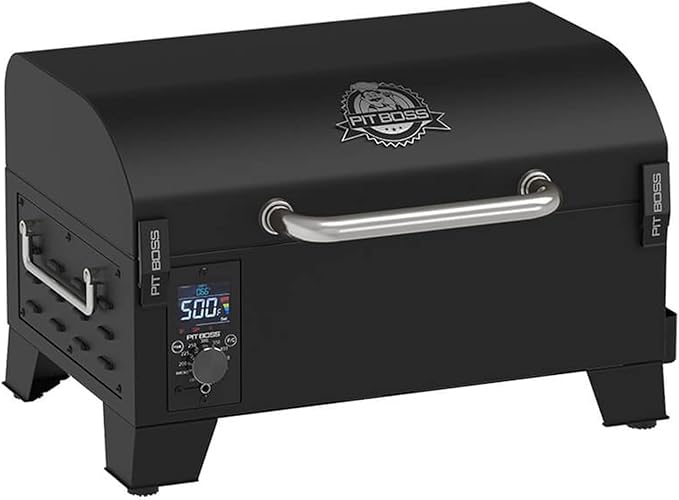
| Pit Boss PB150PPG Table Top | 256 sq in | ~200W | ~45W | 47 lb | Solo / couple boondockers, small inverters |
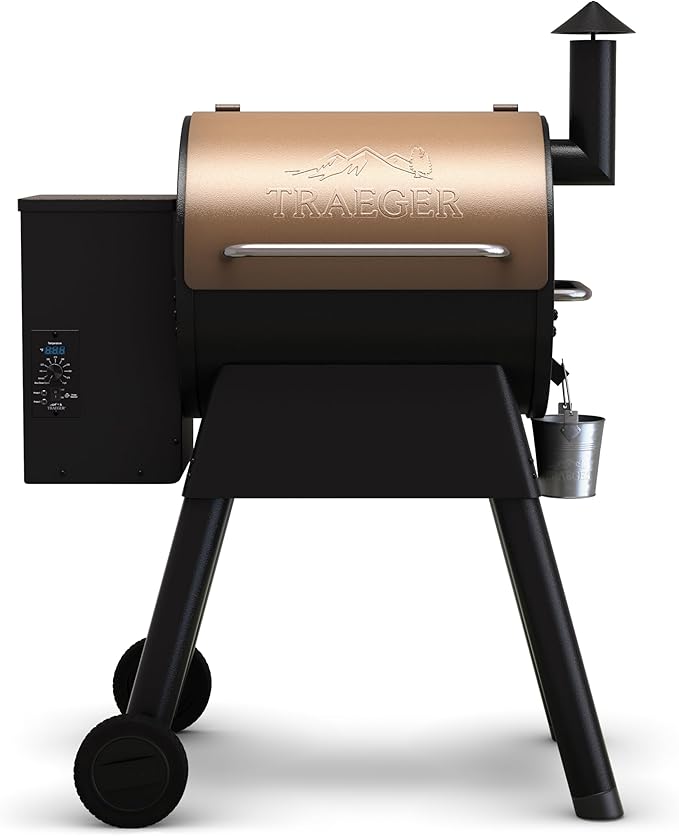
| Traeger Pro 22 | 572 sq in | ~300W | ~50W | 103 lb | RVers with 2000W+ inverter, fifth wheels |
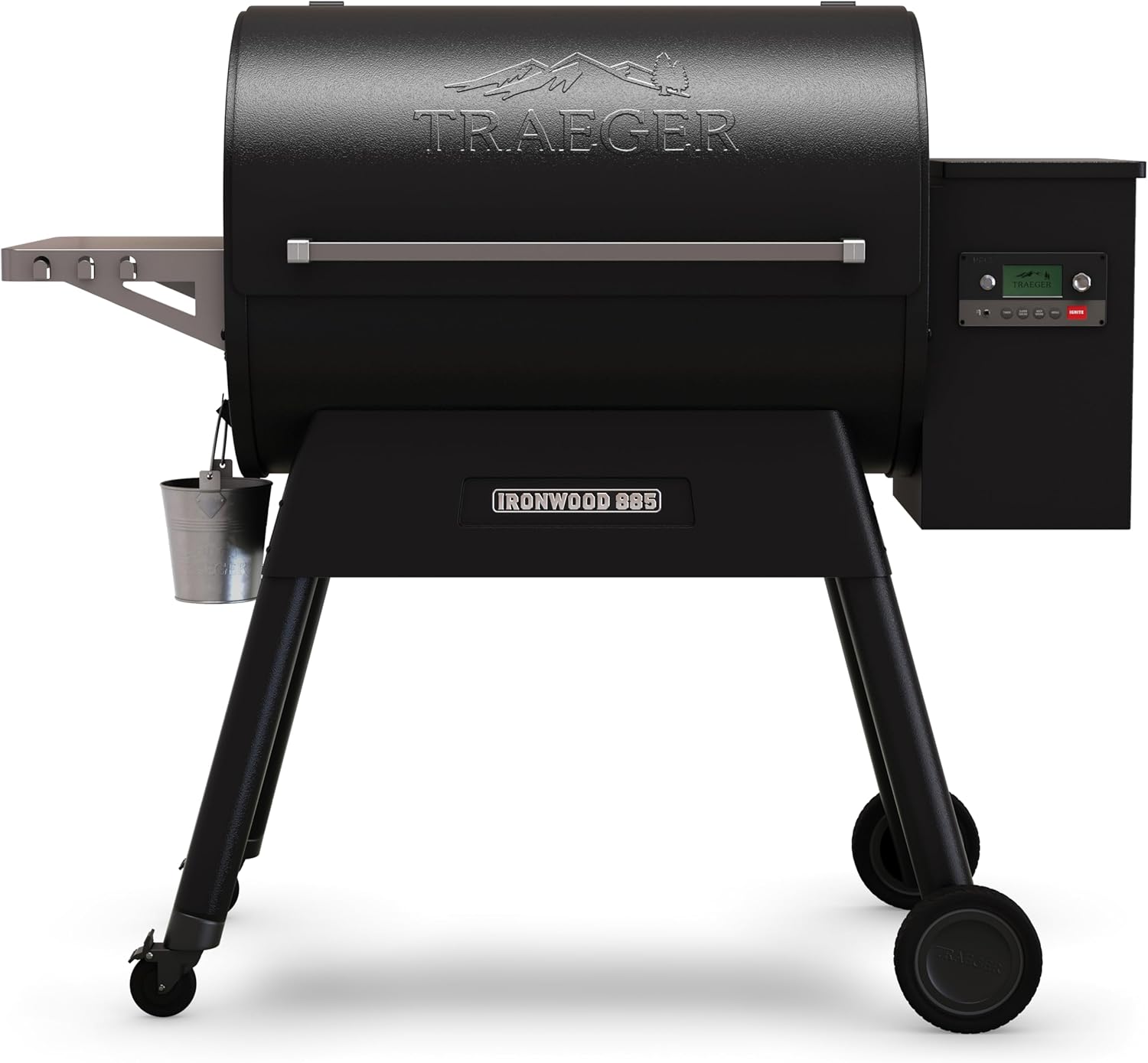
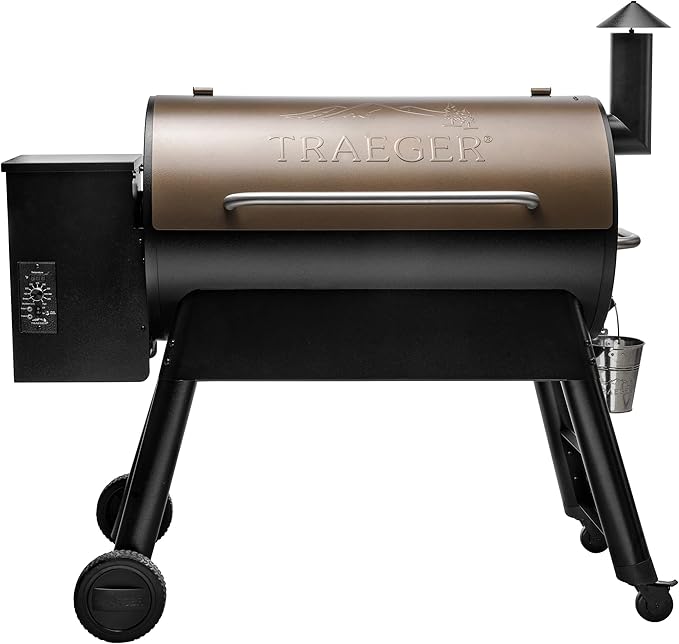
| Traeger Pro 34 | 884 sq in | ~300W | ~50W | 147 lb | Full-time families, large toy haulers only |
| Amazon Basics 16" Vertical Charcoal | ~365 sq in | 0W | 0W | ~22 lb | Backup when batteries are flat, fire-ban-free zones |
Our top pellet grill picks for full-time RV boondocking
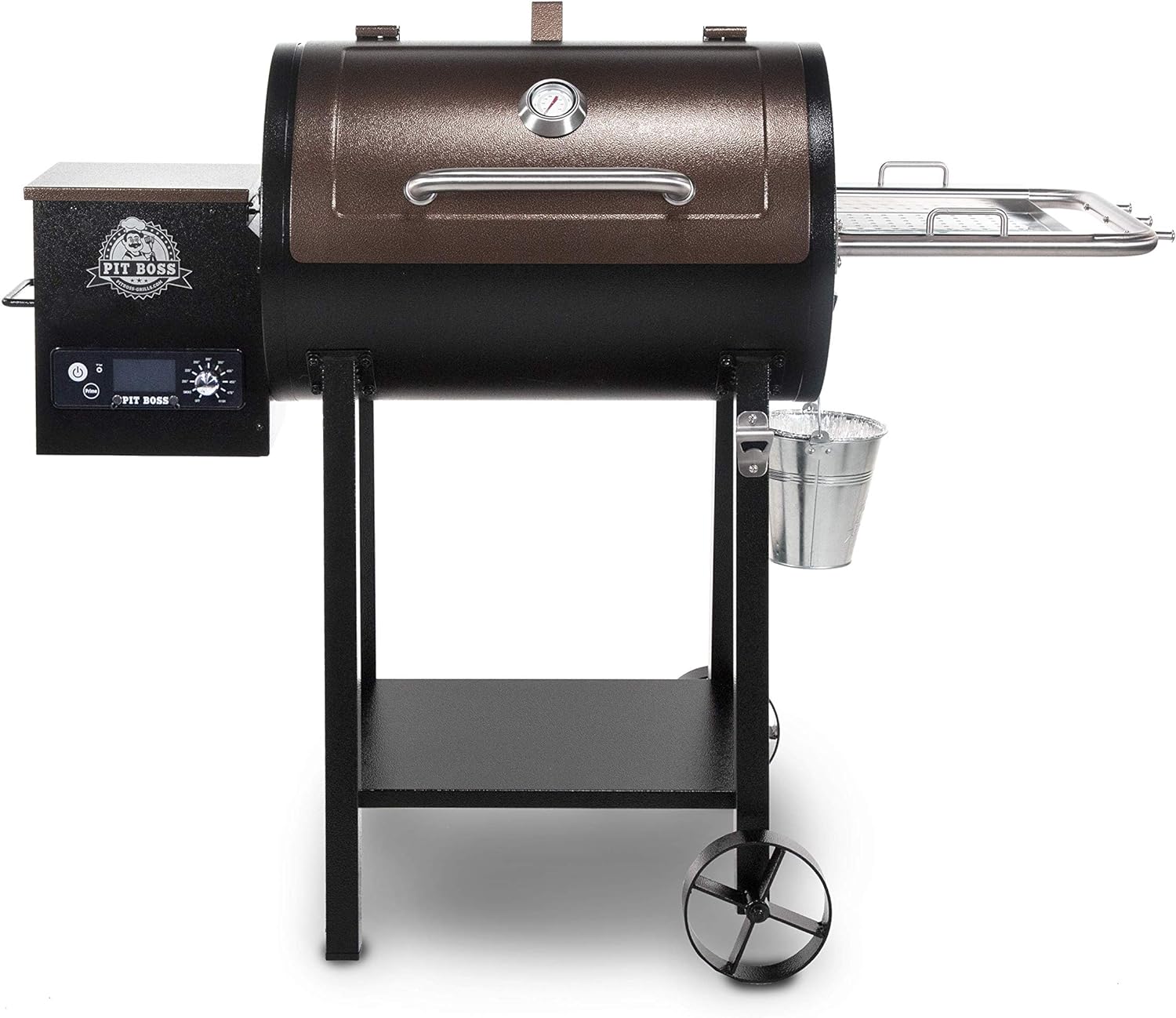
Pit Boss PB150PPG Table Top Wood Pellet Grill — Best Overall for RV Boondocking
If you only buy one grill for full-time off-grid RV life in 2026, make it this one. At 47 pounds and 21 inches wide, the PB150PPG slides into a passenger-side basement bay on most Class C and travel trailer rigs, and the folding legs let you set it up on a picnic table without bending over a hot lid. Cook area is 256 square inches, which is enough for two racks of ribs, a brisket flat, or eight burgers. Startup draw measured on our Victron shunt was right around 200 watts for 3 minutes, then dropped to 40-50 watts on the cruise. A 1,000-watt pure sine inverter handles it without complaint, and a 100Ah lithium battery will run a 5-hour cook and still have 60% state of charge left when you flame out.
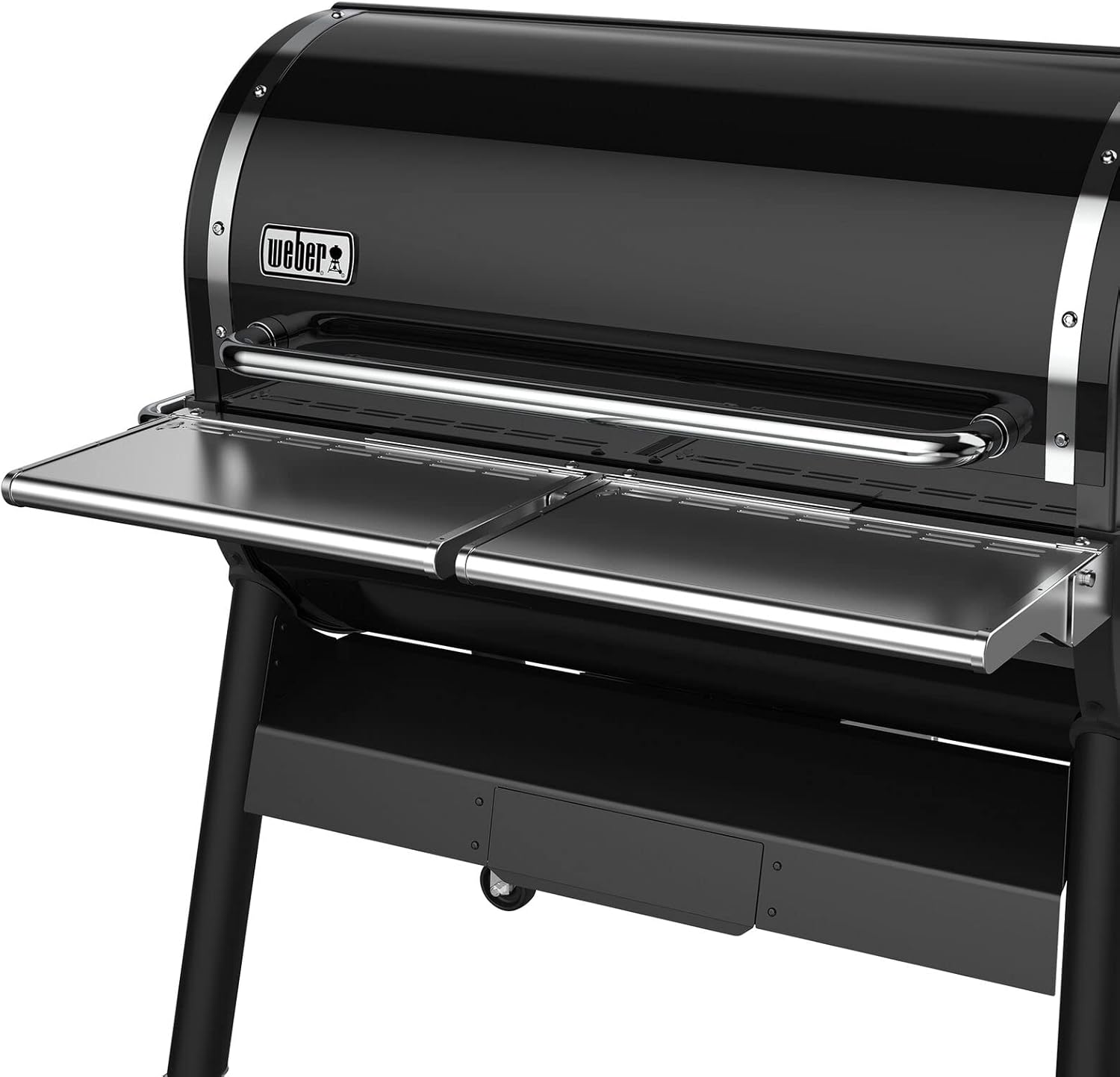
The PID controller holds within 10 degrees of set point in calm conditions, which is the spec that actually matters when you're cooking at a windy BLM dispersed site. Pellet consumption is roughly 0.5 lb per hour at 225 degrees, so a 20-lb bag is about 40 hours of smoke — enough for a month of weekend cooks. Check the Pit Boss PB150PPG on Amazon.
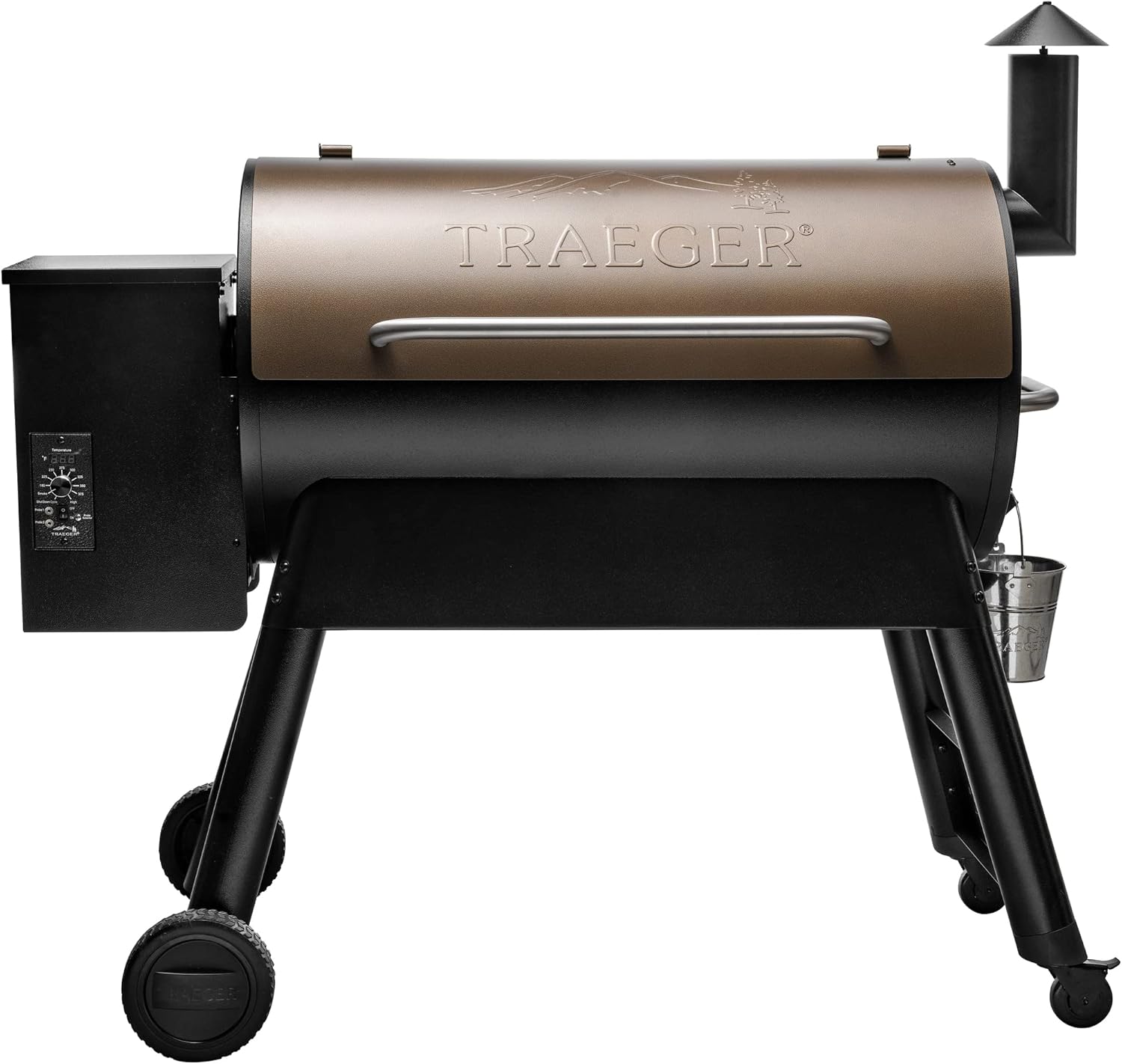
Traeger Pro 22 — Best for Fifth Wheels and Larger Rigs
If you live in a 30-foot-plus fifth wheel with a 2,000-watt inverter and a 200Ah-plus lithium bank, the Pro 22 is the sweet spot between cook area and power draw. You get 572 square inches — enough for a whole packer brisket plus sides — and Traeger's WiFIRE app means you can monitor temps from inside the RV when the rain rolls in. The Pro 22 is heavier at 103 lb, so plan for two people to load it, and the legs do not fold; you'll need a basement bay or a tow vehicle bed to haul it.
Real-world cruise draw is about 50 watts once the igniter cycles off, but the initial 300-watt spike is the limit factor. If your inverter is 1,500 watts or less, skip this and grab the PB150PPG instead. For everyone else, this is the closest you'll come to a backyard cook experience while parked at 8,000 feet in the San Juans. Check the Traeger Pro 22 on Amazon.
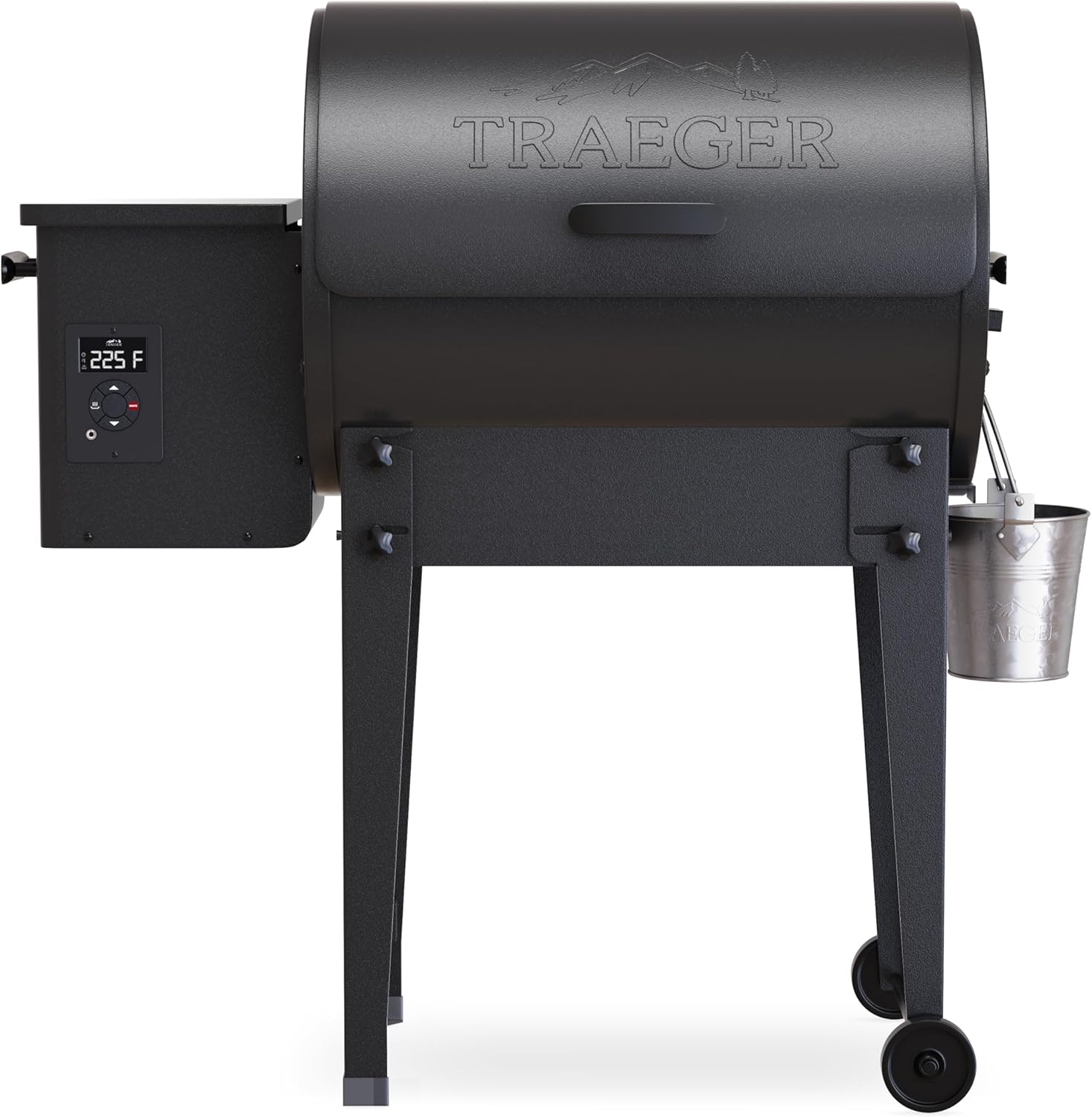
Traeger Pro 34 — Only If You Have a Toy Hauler
We include the Pro 34 only because some readers will ask. At 884 square inches and 147 pounds, this is a backyard-class grill that should not be in a 25-foot travel trailer. But for full-time families living in 40-foot toy haulers with garage space, dual lithium banks, and 800+ watts of rooftop solar, it is the only pellet rig on this list that can feed six people without batch cooking. Power draw per square inch is actually better than the Pro 22, but absolute consumption is higher because you'll cook longer and hotter.
Realistic boondocking budget: a 300Ah lithium bank, 600 watts of solar, and the discipline to only run long cooks on sunny days. Check the Traeger Pro 34 on Amazon.
Amazon Basics 16-inch Vertical Charcoal Smoker — Best Non-Electric Backup
Every serious boondocker should have a non-electric backup for the inevitable cloudy week when your batteries are too low to fire the pellet grill. The Amazon Basics 16-inch vertical charcoal smoker weighs about 22 lb empty, breaks down into three stacked sections that nest inside each other for storage, and runs entirely on lump charcoal or briquettes — zero amp draw, zero pellets to source in a rural town. With 365 square inches of cook area across two grates, it punches well above its price.
The catch: charcoal is banned during many western fire restrictions when pellets are still allowed (because pellet grills are technically a contained appliance). Check local rules before lighting. Check the Amazon Basics 16-inch Vertical Smoker on Amazon.
How to power a pellet grill for RV boondocking without killing your batteries
The math is simpler than most YouTube videos make it. Your pellet grill for RV boondocking needs three things from your electrical system: enough surge capacity to handle the igniter, enough sustained capacity to run the auger and fan, and enough total Wh to outlast your cook.
Inverter sizing
Pick a pure sine wave inverter rated at minimum 2x your grill's startup wattage. For the PB150PPG that means a 600W inverter minimum, but we recommend 1,000W for headroom on cold-weather starts when the igniter cycles longer. For Traeger Pro models, plan on 2,000W minimum. Modified sine wave inverters will damage the PID controller — do not try to save money here.
Battery bank
A 4-hour smoke at 50 watts cruise plus a 5-minute 200W startup is roughly 215 Wh of energy. A 100Ah lithium battery (1,280 Wh usable) handles this easily even without solar. AGM owners should size at 200Ah minimum because of the 50% depth-of-discharge rule.
Solar offset
If you're cooking in daylight (the common case), 200 watts of solar on a clear day will fully offset the pellet grill's draw and put energy back into the bank. We've published a full RV solar sizing guide for cooking appliances if you want to run the numbers for your specific setup.
Pellet storage and sourcing on the road
Pellets absorb humidity, and a swollen pellet jams the auger faster than anything else. Store your bags in 5-gallon buckets with Gamma Seal lids in a basement bay — not in the wet bay, not under the RV. Brand availability varies wildly by region; we recommend buying a case of your preferred brand before heading into long boondocking stretches in Arizona, Utah, and Nevada where Traeger and Pit Boss pellets can be hard to find outside of Cabela's. For specific flavor recommendations, see our guide to the best pellet brands for brisket.
Mounting and storage on the rig
The PB150PPG fits inside a 30x16x18-inch passenger-side basement bay on most travel trailers. The Pro 22 typically requires a cargo-area mount or a tow vehicle bed; do not strap it to a bumper-mounted cargo carrier — the vibration kills the PID board within a season. We've seen plenty of full-timers mount the PB150PPG to a swing-out arm off the rear ladder with a marine-grade pelican enclosure; cheaper rigs use a Rubbermaid deck box bolted to the bumper. Either works.
Frequently Asked Questions
Can I run a pellet grill off my RV's house batteries without an inverter?
No. Every consumer pellet grill on the market requires 120V AC power. You need a pure sine wave inverter between your 12V battery bank and the grill. DC-only pellet grills do not currently exist in the consumer market as of 2026.
How many watts does a pellet grill use during a long brisket smoke?
After the initial 3-5 minute igniter phase (200-350W), most small pellet grills cruise at 30-70W for the duration of the cook. A 12-hour brisket smoke typically consumes 0.6-0.9 kWh total — roughly equivalent to running a laptop for the same period.
Will a pellet grill work above 8,000 feet of elevation?
Yes, but cook times extend roughly 10-15% and pellet consumption rises because thinner air affects combustion efficiency. The PID controllers in 2026 models compensate automatically, but you'll want to factor extra pellets into your fuel budget for high-altitude boondocking in Colorado and northern Arizona.
Are pellet grills allowed during western fire restrictions?
Usually yes, when open-flame charcoal and wood fires are banned. Pellet grills are classified as contained appliances with off switches, similar to propane grills. Always verify with the specific BLM or Forest Service district office before lighting — Stage 3 restrictions ban all outdoor cooking regardless of appliance type.
What's the smallest pellet grill that can still smoke a whole brisket?
The Pit Boss PB150PPG at 256 square inches can handle a 12-lb packer brisket trimmed and folded, though you'll lose some bark on the folded end. For a flat-laid brisket without folding, you need at least 400 square inches — the Traeger Pro 22 is the smallest pick in this guide that qualifies.
How do I keep pellets dry in a humid coastal boondocking environment?
Store opened bags in airtight 5-gallon buckets with Gamma Seal lids. Add a desiccant pack (50-100g silica gel) per bucket. Never store pellets in the original paper bag once opened — even one humid night will cause swelling and auger jams. Replace desiccant every 60 days when boondocking in Florida or the Pacific Northwest.
Can I tow with a pellet grill mounted to the rear bumper?
Only if the grill is in a hard case and the mount is rated for the grill's weight plus dynamic load (roughly 3x static weight). Bumper-mounted pellet grills without enclosures will fail — the controller boards do not survive sustained highway vibration. A basement bay is always the better answer; see our RV basement bay organization guide for layout ideas.
Key Takeaways
- Choosing the right pellet grill for RV boondocking means matching capacity and output ports to your actual devices
- Always check actual watt-hours (Wh), not just watts — runtime depends on Wh, not peak output
- Also covers: off grid pellet smoker
- Also covers: RV pellet grill solar
- Also covers: boondocking pellet grill
- Compare price-per-Wh across models to find the best value for your budget